You've been there. You mention a food allergy or dietary restriction to a server, and they smile and say, "Of course, we can accommodate that." Instantly, a small wave of relief washes over you. But so does a quiet, nagging doubt. Can they really? Or is this a well-intentioned answer that the kitchen hasn't actually signed off on?
For anyone managing serious food allergies, celiac disease, or strict dietary preferences, that moment of uncertainty is genuinely stressful. The phrase "we can accommodate" has saved many diners and let many others down. Knowing how to read it accurately is one of the most practical skills you can develop when eating out. Here's what that actually looks like in practice.
Why "We Can Accommodate" Isn't Always a Green Light
The gap between a server's reassurance and kitchen reality can be significant. In most restaurants worldwide, servers handle dozens of tables, memorize specials, manage timing, and navigate customer requests all at once. Allergen knowledge is often one part of a very crowded training curriculum, and the depth of that training varies enormously from restaurant to restaurant.
When a server says they can accommodate your needs, they're often genuinely trying to help. But their confidence doesn't always reflect actual kitchen protocol. Common issues include:
- Shared prep surfaces or cooking oils that introduce cross-contact
- Sauces and marinades with unlisted allergens (soy, gluten, shellfish derivatives)
- Kitchen staff who weren't informed of the modification
- A server who interpreted your request more loosely than you intended
According to Food Allergy Research and Education (FARE), roughly 200,000 people require emergency medical care for allergic reactions to food each year. A significant portion of those reactions happen outside the home, in restaurant settings where allergen accommodation was assumed rather than confirmed.
That's not meant to frighten you away from dining out. The goal is to help you develop a clearer sense of when a restaurant's assurance is actually trustworthy.
Green Flags: Signs a Restaurant Can Genuinely Deliver on Dietary Accommodations
Some restaurants genuinely do get it right. Restaurant accommodation for dietary restrictions is most reliable when specific operational practices are in place. Here's what those look like from a diner's perspective.
Staff Who Ask Clarifying Questions
A server who responds to your allergy mention by asking follow-up questions is a strong positive signal. "Is this a severe allergy or a preference?" or "Do you need us to change gloves and use a separate pan?" shows that the staff have been trained with real allergen awareness, not just surface-level talking points.
A Printed Allergen Matrix or Menu Notes
Many restaurants in the UK, EU, and Australia are legally required to provide allergen information. But plenty of restaurants outside those regions now voluntarily offer allergen matrices or detailed menu notes. If a restaurant has done the work to document which dishes contain the 14 major allergens (or local equivalents), that's a sign of structured kitchen awareness.
Willingness to Say "No"
Counterintuitively, one of the best signs is when a restaurant declines to accommodate a request. "We can't guarantee that dish is gluten-free because of our shared fryer" is far more trustworthy than "Sure, no problem." A staff member who acknowledges risk rather than dismissing it is operating from genuine knowledge.
A Chef Who Comes to the Table
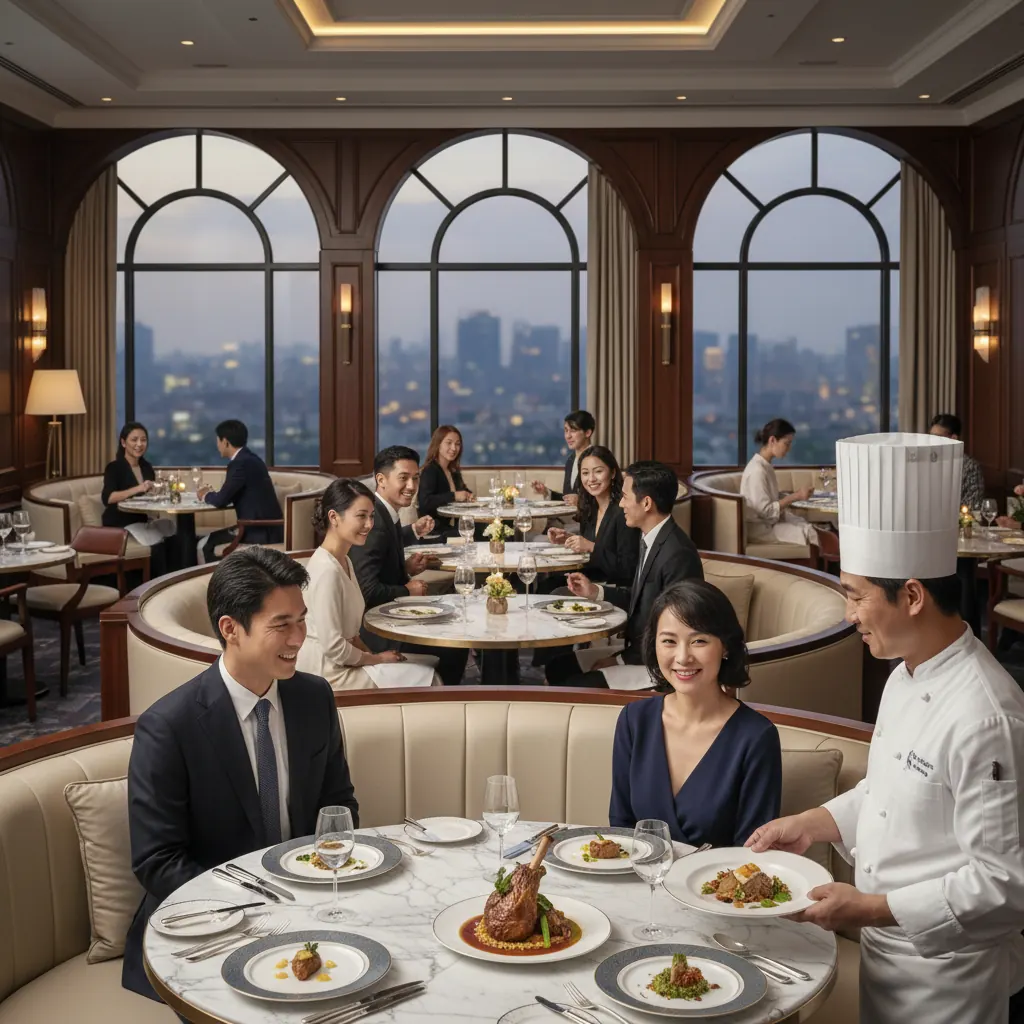
In higher-end restaurants globally, it's not unusual for the kitchen to send a message through the server or for a chef to briefly speak with a guest about allergen requirements. This is a clear sign that the request has actually reached the people preparing the food.
Red Flags: When to Be Cautious About Restaurant Trust
Recognizing when to be skeptical is just as important. These patterns don't mean the restaurant is negligent, but they do suggest you should proceed carefully and ask more specific questions before ordering.
Vague or Immediate Reassurances
If you mention a serious allergy and the server says "Oh yes, absolutely, that's fine" without pausing to check or asking any questions, that confidence may not be grounded in facts. Asking staff about allergies and receiving an instant, unchecked answer is a flag worth noting.
High-Volume or Chain Environments with Pre-Prepped Ingredients
Fast-casual and high-turnover restaurants often rely on pre-portioned, centrally prepped ingredients. This isn't inherently bad, but it does mean the kitchen has less flexibility to modify dishes on the fly. Cross-contact risk is higher when ingredients arrive pre-mixed or pre-seasoned.
Ambiguity Around Shared Equipment
If you ask about shared fryers or prep surfaces and get a vague response, that's important information. Cross-contact from shared allergen equipment is one of the most common causes of unintended reactions. Some restaurants have dedicated fryers or preparation areas for allergen-sensitive meals. If they don't know whether they do, it's safer to assume they don't.
Situation | Trust Level | Recommended Action |
|---|---|---|
Server asks clarifying follow-up questions | High | Confirm specifics and proceed with confidence |
Written allergen menu or matrix available | High | Cross-reference with your needs directly |
Instant reassurance, no questions asked | Low to Moderate | Ask specific follow-up questions about prep |
Shared fryers or prep surfaces unconfirmed | Low | Choose a different dish or restaurant |
Restaurant declines to guarantee safety | High (honesty) | Appreciate the transparency; pivot your order |
Chef confirms allergen protocol directly | Very High | Order with confidence after confirming details |
The Role of Allergen Training (and Why It Varies So Much)
Restaurant staff allergen training is genuinely inconsistent across markets. In the European Union, allergen labeling and staff training requirements are codified under EU Food Information Regulation. In Australia, Food Standards Australia New Zealand provides allergen guidance that restaurants are expected to follow. But in many countries, there is no standardized requirement for how thoroughly staff must be trained on allergen management.
This means that dining out safely with allergies depends heavily on individual restaurant culture and ownership priorities, not just legal frameworks. A small family-run restaurant may have deeply knowledgeable staff because the owner takes it personally. A mid-range chain may have extensive written protocols but inconsistent application in practice.
What Good Training Actually Looks Like
Formal allergen training programs, like those offered by national hospitality associations in the UK, Australia, and Canada, cover several key areas:
- Recognizing the most common allergens and their hidden sources
- Understanding cross-contact versus cross-contamination
- Proper communication channels between front-of-house and kitchen
- How to handle severe allergic reaction emergencies
You can't always verify whether a restaurant has completed formal training, but you can observe whether the staff's responses reflect that knowledge. Specific, thoughtful answers are a much better indicator than enthusiasm alone. It's also worth noting that some common food additives and hidden ingredients in sauces, stocks, and dressings are frequently overlooked even by well-meaning kitchen teams.
A Smarter Approach to Risk Assessment at Any Restaurant
Developing a personal framework for risk assessment around allergen accommodation makes dining out far less stressful. We think of it in three layers.
Layer One: Pre-Visit Research
Whenever possible, check the restaurant's menu online before you go. Many restaurants now post allergen information digitally. If the menu is unclear or uses vague descriptors, that's worth knowing before you're already seated. Tools like AlignEat can help you decode menus in advance, identifying which dishes align with your dietary needs so you arrive informed rather than anxious.
Layer Two: The Right Questions at the Table
There are a few questions that cut through vague reassurances very quickly:
- "Is this dish prepared in a shared fryer or on a shared surface?"
- "Does the sauce or dressing contain [specific allergen]? Can you check the label or ask the kitchen?"
- "If I need this to be [gluten-free/nut-free/dairy-free], what steps does the kitchen take to prevent cross-contact?"
These questions signal that you're serious about your needs. They also quickly reveal whether the staff member knows their menu or is guessing.
Layer Three: Knowing When to Walk Away
Sometimes the honest answer is that a particular restaurant isn't equipped for your specific needs on a given night. A busy kitchen mid-service, a new staff member who seems uncertain, a menu heavy on shared sauces and complex preparations: these aren't necessarily dealbreakers, but they are factors worth weighing when the stakes are high for your health.
Choosing a different dish, a different restaurant, or a different night isn't failure. It's smart risk management.
A Counterargument Worth Considering
Some nutrition and food safety advocates argue that placing too much responsibility on diners creates an unfair burden. Restaurants, particularly those serving the public, carry a duty of care that shouldn't require customers to conduct their own investigation. That's a fair and important point. The ideal world is one where allergen transparency is standard practice everywhere, not an exceptional feature.
But until that world exists consistently across all markets and price points, practical self-advocacy remains a necessary skill. The goal isn't to be suspicious of every restaurant. It's to be informed enough to know where to place your trust.
Where Restaurant Accommodation Is Heading
The future of allergen transparency in restaurants looks genuinely promising. Several trends are converging in meaningful ways.
Digital menus with embedded allergen filters are becoming more common at restaurants across Europe, Asia, and beyond. QR code menus accelerated this shift significantly. More restaurants are investing in dedicated allergen management software that connects front-of-house requests directly to kitchen prep protocols, reducing the human error gap that causes most unintended exposures.
AI-powered tools are also transforming how diners prepare before they even walk through the door. The ability to analyze a full menu against your specific dietary profile, instantly and without having to decode ingredient lists manually, is changing the dynamic for people with restrictions. Rather than depending entirely on whether a server has the right training, diners can arrive already knowing which dishes are likely safe and which warrant further questions.
We expect to see certification systems for allergen-safe restaurants becoming more widely adopted globally, similar to how organic or halal certifications work. This would give diners a clear, verifiable signal of trust rather than relying on verbal assurances alone.
Conclusion
"We can accommodate" can be one of the most reassuring phrases you hear at a restaurant, or one of the most misleading. The difference lies in what's behind it: genuine training, kitchen protocols, and a culture of transparency. Learning to read the signals, asking the right questions, and doing a little groundwork before you arrive makes an enormous difference in how confidently you can eat out.
You deserve to enjoy restaurant meals without anxiety, regardless of your dietary needs. That confidence doesn't come from blind trust or constant suspicion. It comes from knowing how to assess the situation clearly and make smart, informed decisions every time you sit down to eat.
Frequently Asked Questions
What should I do if a server seems unsure about allergen information?
Ask them to check with the kitchen directly rather than guess. A good server will always prefer to take a moment to confirm accurate information rather than give you an answer they're not certain about. If the kitchen can't confirm either, that's useful information too. In that situation, choosing a simpler dish with fewer ingredients, or a dish where the allergen risk is clearly lower, is a practical and safe approach.
Is it safer to call ahead to a restaurant about dietary restrictions before visiting?
Calling ahead is one of the most effective strategies, particularly for severe allergies or complex restrictions. It gives kitchen staff time to plan, check ingredients, and designate a safe preparation approach without the time pressure of service. It also allows you to gauge how seriously the restaurant takes allergen requests before you've committed to the visit. Many restaurants with strong allergen protocols actually appreciate the advance notice.
How can I tell if a restaurant has proper allergen training for its staff?
The clearest indicators are the quality and specificity of the responses you receive when asking about allergens. Staff who understand the difference between an ingredient exclusion and cross-contact prevention, who know which dishes carry higher risk, and who communicate directly with the kitchen before confirming anything, are almost certainly working in an environment with solid allergen training. Printed allergen menus or matrices are also a strong positive sign, as is a willingness to say "we can't guarantee that" rather than offering blanket reassurance.
Sources
- Food Allergy Research and Education (FARE). Facts and Statistics. https://www.foodallergy.org/resources/facts-and-statistics
- Healthline. Common Food Additives. https://www.healthline.com/nutrition/common-food-additives
- European Food Safety Authority. Allergens. https://www.efsa.europa.eu/en/topics/topic/allergens