
On this page
You've been doing well all week. Meal prep sorted, macros tracked, energy consistent. Then Thursday rolls around and your calendar pings: client dinner at a restaurant you've never heard of. Suddenly the mental math begins. What's on the menu? Will there be anything safe? Do you risk the bread basket?
Business meals are one of the trickiest environments for anyone managing dietary goals, whether that's a low-carb or keto eating plan, a food allergy, or a specific nutritional target. The stakes feel higher because you're not just managing food. You're managing a relationship, a professional impression, and your own wellbeing, all at the same time.
The good news: this doesn't have to feel like survival mode. With the right strategy, you can navigate business meals with dietary restrictions confidently, enjoy the social experience fully, and leave the table feeling good about every choice you made.
Why Business Dinners Are a Unique Dietary Challenge
Most dietary advice focuses on what you eat at home, where you control the kitchen. Business dining flips that entirely. You're working within someone else's menu, often at a restaurant chosen by a colleague or client, in a social setting where you don't want to draw attention to your plate.
The pressure is real. Research consistently shows that social eating influences food choices in ways that solo dining doesn't. People tend to match the eating pace, portion size, and food selections of those around them. Add alcohol, shared starters, and the signal-versus-noise confusion of a multi-page menu, and staying on track with a low-carb keto approach becomes genuinely difficult.
There's also the hidden ingredient problem. Sauces, dressings, and marinades often contain sugars, starches, and common food additives that don't appear obviously on a menu. For someone managing keto or a strict elimination diet, a seemingly safe grilled fish dish can derail progress if it's glazed with a honey-citrus reduction that isn't advertised.
Understanding these dynamics is the first step. The next is building a practical toolkit that lets you handle them without stress.
Building Your Pre-Dinner Strategy
The professionals who consistently succeed at staying on track during client meals share one habit: they prepare before they arrive. This isn't overthinking. It's just smart planning, the same way you'd prep talking points before a presentation.
Scout the Menu in Advance
Most restaurants publish their menus online. When you have lead time, use it. Look for protein-forward dishes that can be adapted: grilled meats, fish, roasted vegetables, salads with dressing on the side. Identify two or three options you feel confident about so you're not scanning the menu in real time while maintaining conversation.
If you're following a business dinner diet plan with low-carb or keto goals, your mental checklist is straightforward: prioritise protein and fat, minimise starchy sides, and flag anything with unknown sauces. Having this sorted ahead of time means you can focus on the people across the table, not the fine print.
This is exactly where AlignEat's menu-scanning approach removes a significant burden. Rather than manually decoding every dish description, you get instant clarity on which options align with your dietary needs, before you even walk through the door.
Eat Something Before You Go
Arriving at a business dinner genuinely hungry is one of the fastest ways to make choices you'll regret. A small, high-protein snack beforehand (think hard-boiled eggs, a handful of nuts, or some Greek yoghurt) takes the edge off hunger and gives you more control when the bread basket arrives.
This isn't about eating less at dinner. It's about making decisions from a place of balance rather than urgency.
Set a Quiet Intention
Before the meal, take 60 seconds to remind yourself of your goal. Not in a rigid, anxious way. Just a simple mental note: "I'm keeping it low-carb tonight, and I'll enjoy every bite of what I choose." That small act of intention dramatically improves follow-through in social eating situations.
Navigating the Menu Like a Pro
When you're seated and the menu opens, a few practical moves make the difference between a confident order and a compromised one.
Know Your Default Order Categories
Across cuisines globally, certain dish types reliably support a low-carb or keto diet at professional dinners. Getting familiar with these across different restaurant types means you're never starting from scratch.
Cuisine Type | Strong Low-Carb Options | Watch Out For |
|---|---|---|
Japanese | Sashimi, edamame, miso soup, yakitori | Teriyaki glazes, sushi rice, tempura batter |
Mediterranean | Grilled fish, mezze plates, lamb dishes, salads | Pita, hummus in large quantities, rice pilaf |
French | Steak, duck confit, roasted vegetables, cheese plates | Bread service, pastry-based starters, crème brûlée |
Indian | Tandoori proteins, dal, saag, raita | Rice, naan, korma sauces (often contain sugar) |
Modern European | Protein mains with vegetable sides, charcuterie | Risotto, pasta dishes, dessert courses |
Ask Smart, Not Awkward
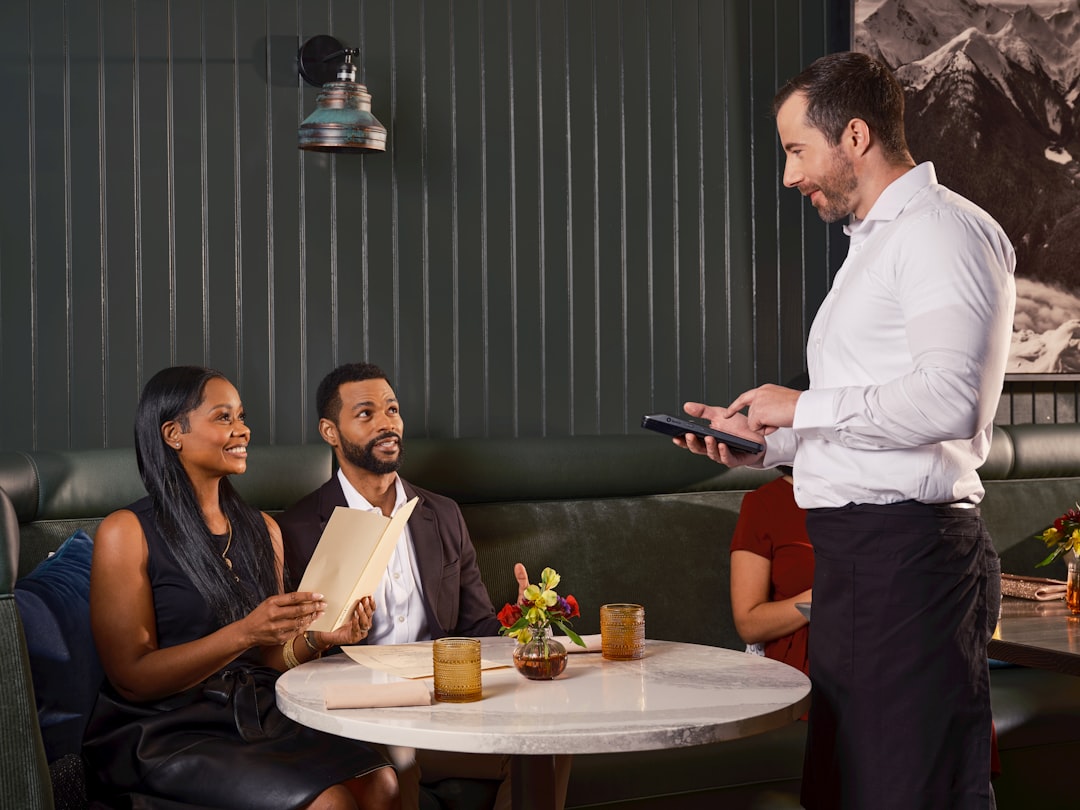
There's an art to asking about ingredients without derailing the flow of conversation or putting your server in a difficult position. Specific questions work better than vague ones. Instead of "Is this healthy?" try "Does the sauce contain any added sugar or flour?" or "Can I swap the rice for extra vegetables?"
Servers at most quality restaurants are used to dietary requests. A clear, polite ask almost always lands well. What creates awkwardness is uncertainty or an apologetic tone that makes the request feel like a burden. Own your needs calmly, and others at the table will barely notice.
For diners managing more serious restrictions like allergies, this clarity becomes even more essential. Food allergy prevalence continues to grow globally, and many restaurants now have trained staff and protocols specifically to handle these requests accurately.
Handle the Alcohol Question
Business dinners often involve alcohol, and this is worth thinking through in advance. From a low-carb and keto standpoint, dry wines and spirits are generally lower in carbohydrates than beer or cocktails with sugary mixers. Sparkling water with a slice of lemon reads identically to a gin and tonic from across the table, if you'd prefer to skip alcohol entirely without commentary.
The point isn't to avoid social participation. It's to participate on your own terms.
The Social Side: Being Present Without Being Difficult
Here's something worth saying plainly: the people across the table from you are almost never paying as much attention to your plate as you think they are. Most of the anxiety around social eating and low-carb dieting is internal.
You Don't Owe Explanations
Ordering a salad as a main, skipping dessert, or asking for dressing on the side doesn't require a disclaimer or a dietary autobiography. A confident, quiet order is almost always received without comment. If someone does ask, a simple "I'm keeping it light tonight" or "I'm not a big bread person" closes the topic gracefully without opening a debate about ketosis.
Focus on the Conversation, Not the Menu
The best business dinners are remembered for the quality of conversation, not the quality of the food. Once you've made your order, put the dietary logistics to one side entirely. Be present. Ask good questions. Listen actively. This is where the real relationship-building happens, and it has nothing to do with what's on your plate.
Tools like AlignEat exist precisely for this reason: to handle the analytical work before you sit down, so you can be fully present once you're there. When the menu is already decoded, you're free to focus on the people, not the ingredients.
A Counterargument Worth Considering
Some nutritionists argue that flexible eating at social events, allowing yourself to step outside a strict plan occasionally, is actually better for long-term adherence than rigid consistency. There's genuine merit to this view. Chronic food anxiety can be more damaging than a single meal off-plan.
Our perspective: the goal isn't perfection. It's confidence. Whether you order strictly on-plan or decide the duck confit with cherry jus is worth the carbs tonight, the healthiest choice is the one you make consciously rather than reactively. A good business dinner diet plan has room for judgment calls.
What the Future of Business Dining Looks Like
Dietary awareness in professional settings is shifting quickly. As more people manage specific eating patterns for health, performance, or ethical reasons, the expectation that business dining should accommodate diverse needs is becoming mainstream rather than exceptional.
Restaurants globally are responding. Plant-forward menus, allergen labelling, and customisable dishes are increasingly standard, particularly at the mid-to-premium tier where most professional dining happens. Some forward-thinking restaurants already offer digital menus with filterable dietary tags, letting diners sort by gluten-free, low-carb, or allergen status before they even speak to a server.
The next evolution is AI-assisted dining at scale. As menu-reading technology becomes more sophisticated, the friction between dietary needs and restaurant experiences will continue to shrink. We expect that within a few years, having instant, accurate dietary clarity on any menu globally will be as expected as having a translation app when dining abroad.
For professionals managing dietary goals today, the gap between where technology is and where it needs to be is already closing. The tools exist. The strategy exists. It's simply a matter of building the habit of using them.
If you're curious about how this works in practice, explore AlignEat's options and see which plan fits your dining frequency and needs.
Putting It All Together
A successful business dinner, when you're managing a low-carb or keto approach, doesn't require willpower or luck. It requires a system that's simple enough to use consistently.
- Scout the menu before you arrive and identify two or three solid options.
- Eat a small protein-rich snack beforehand to avoid hunger-driven decisions.
- Use a clear, confident tone when asking servers about ingredients.
- Know your default orders across common cuisine types.
- Think through the alcohol question ahead of time.
- Once you've ordered, put the logistics away and be present in the conversation.
The goal isn't to white-knuckle your way through dinner. It's to feel so prepared that the meal becomes what it's supposed to be: a genuine opportunity to connect with colleagues and clients, supported by a diet approach that travels with you.
Dietary restrictions and lifestyle goals don't have to stay home when you go to a business dinner. With the right preparation, they can come along quietly, do their job, and let you focus on what actually matters at the table. If you'd like to explore how AlignEat can support your dining strategy, get in touch with our team and we'll walk you through how it works for your specific needs.
Frequently Asked Questions
Can I follow a strict keto diet at business dinners without anyone noticing?
Yes, and most diners manage it seamlessly. Ordering grilled protein with vegetables instead of a starchy side, skipping the bread basket, and choosing a dry wine reads as normal, preference-based ordering to everyone else at the table. No explanation is needed, and no one will typically notice.
How do I handle a multi-course set menu at a formal business dinner when I'm low-carb?
Contact the restaurant ahead of time, ideally 24 to 48 hours before. Most fine-dining venues that offer set menus will substitute a course or modify a dish for dietary needs when given advance notice. This is standard practice at professional-tier restaurants globally, not an unusual request.
Is AlignEat useful for international business travel where menus are in a different language?
AlignEat is specifically built for this situation. The platform decodes menus from restaurants worldwide, including those in languages you don't speak, instantly identifying dishes that match your dietary profile. This makes it especially practical for frequent business travellers navigating unfamiliar cuisines.