
On this page
- Why Lebanese food works well for low-carb and keto eaters
- The best low-carb Lebanese dishes to order
- What to skip or modify when dining low-carb at a Lebanese restaurant
- Hidden carbs to watch for in Lebanese cooking
- Counterarguments: is low-carb Lebanese dining really realistic?
- Practical tips for your next Lebanese restaurant visit
- Conclusion
- Frequently Asked Questions
Lebanese cuisine is one of the most naturally diet-friendly food traditions in the world. Fresh herbs, slow-grilled meats, bright salads, and olive oil-drenched dips form the backbone of every menu. Yet if you're keeping carbohydrates low, a Lebanese restaurant can still feel like a minefield. Pita bread appears at every turn. Rice and bulgur wheat show up in dishes you might not expect. And some of the most beloved options, like kibbeh and fattoush, carry more carbs than their fresh ingredients suggest.
The good news: with a clear map of the menu, low-carb Lebanese restaurant dining is genuinely achievable and deeply satisfying. You don't have to feel anxious, and you don't have to interrogate your server for twenty minutes. Here's how to navigate it confidently.
Why Lebanese food works well for low-carb and keto eaters
Lebanese cuisine is built around whole, minimally processed ingredients. Grilled proteins, fresh vegetables, legumes, and quality fats appear on almost every table. For anyone following a ketogenic diet at a Lebanese restaurant, this is genuinely great news because the cuisine's core components align naturally with low-carb eating principles.
The challenge isn't the food philosophy itself. It's the specific dishes that act as carb carriers. Pita, rice, bulgur, and chickpea-heavy preparations are all traditional staples that deserve a spot on someone else's plate when you're watching carbohydrates. Once you know which dishes contain these ingredients, the rest of the menu opens up beautifully.
The role of fat and protein in Lebanese cooking
Lebanese cooking relies heavily on olive oil, tahini, lamb fat, and full-fat yogurt. These are exactly the kinds of quality fats that support ketosis and keep you satiated. Grilled meats are often marinated in lemon juice, garlic, and spices rather than sugar-based sauces, which means they're low in hidden carbohydrates too. This is a significant contrast to many other cuisines where marinades and sauces routinely contain added sugars.
The best low-carb Lebanese dishes to order
Knowing what to reach for makes the whole experience easier. These are the dishes that consistently deliver on flavor while keeping your carbohydrate intake in check.
Mezze plates to embrace
The mezze spread is where Lebanese dining really shines for low-carb eaters. Many mezze options are genuinely keto-compatible when ordered without pita bread. Ask for cucumber slices, celery sticks, or raw vegetables to use as dippers instead.
- Hummus: Yes, chickpeas contain carbs, but a standard serving of hummus (around 2 tablespoons) is relatively moderate. Enjoy it in reasonable portions, not as a main course.
- Mutabbal (baba ganoush): Roasted eggplant blended with tahini and lemon. Lower in carbs than hummus and rich in smoky flavor.
- Labneh: Strained yogurt with olive oil and za'atar. High in protein and fat, very low in carbs.
- Warak dawali (stuffed grape leaves): *Proceed with caution.* Traditional versions contain rice. Ask if the kitchen offers a meat-only version, which some restaurants do accommodate.
- Shanklish: Aged cheese rolled in herbs and spices. A wonderful high-fat, low-carb choice.
Grilled proteins: the heart of a keto Lebanese order
The grill section of any Lebanese menu is your best friend. Keto Lebanese food ordering becomes straightforward when you focus here.
- Shish taouk: Marinated chicken skewers grilled over charcoal. Request without the garlic sauce (toum) if you want to keep things simple, though toum is made from garlic, lemon, and oil and is itself low in carbs.
- Kafta: Spiced ground lamb or beef formed around skewers and grilled. No fillers, no breading, just meat and aromatics.
- Lamb chops (costolettes): Simply seasoned and grilled. One of the most naturally keto-compatible proteins on any Lebanese menu.
- Samak meshwi (grilled fish): Whole fish grilled with herbs and lemon. Excellent lean protein option with zero added carbohydrates.
Salads that work (and one that needs a tweak)
Lebanese salads are fresh and vibrant, but two of the most popular options require attention.
Fattoush contains toasted pita chips, which add a surprising amount of carbs. Ask for it without the chips and it transforms into a genuinely low-carb option packed with cucumber, tomato, mint, and purslane.
Tabbouleh is predominantly bulgur wheat, not parsley. The parsley is a garnish in traditional recipes, meaning a standard serving can be higher in carbohydrates than it looks. Some restaurants offer a parsley-forward version with minimal bulgur if you ask.
Fattoush (modified) and green salads with olive oil and lemon are your safest bets. If the restaurant offers a simple cucumber and tomato salad dressed with olive oil, order it without hesitation.
What to skip or modify when dining low-carb at a Lebanese restaurant
Some dishes are genuinely difficult to adapt without losing their character. These are the ones to skip or approach carefully when making a low-carb Lebanese restaurant keto order.
Dish | Why it's high-carb | Approximate carb concern | Low-carb alternative |
|---|---|---|---|
Kibbeh (fried) | Bulgur wheat shell | High | Kibbeh nayyeh (raw, no shell) |
Mujaddara | Lentils and rice | High | Skip entirely |
Fattoush (standard) | Toasted pita chips | Moderate-high | Order without chips |
Rice-stuffed warak dawali | White rice filling | High | Request meat-only version |
Tabbouleh | Bulgur wheat base | Moderate | Ask for parsley-heavy version |
Pita bread (basket) | Refined wheat flour | High | Politely decline the basket |
Falafel | Chickpea and flour base, deep-fried | Moderate-high | Small portion or skip |
A note on falafel
Falafel deserves its own mention because it surprises people. The dish looks protein-heavy, but it's made primarily from chickpeas and often contains flour as a binder. A serving of three to four falafel balls can carry more carbohydrates than expected. If you love falafel, a small portion alongside a large protein main is manageable, but it shouldn't anchor your meal when you're keeping carbs tight.
Hidden carbs to watch for in Lebanese cooking
This is where low-carb Middle Eastern dining gets genuinely tricky. Several dishes contain carbohydrates that don't announce themselves on the menu description.
Sauces and accompaniments
Toum (garlic paste) and tahini-based sauces are typically low in carbohydrates. Pomegranate molasses, however, which appears in some salad dressings and marinades, is concentrated sugar. If a dish is described as having a "sweet-tart" flavor, it may contain pomegranate molasses. Ask your server or check before you order.
Kibbeh nayyeh: a hidden gem
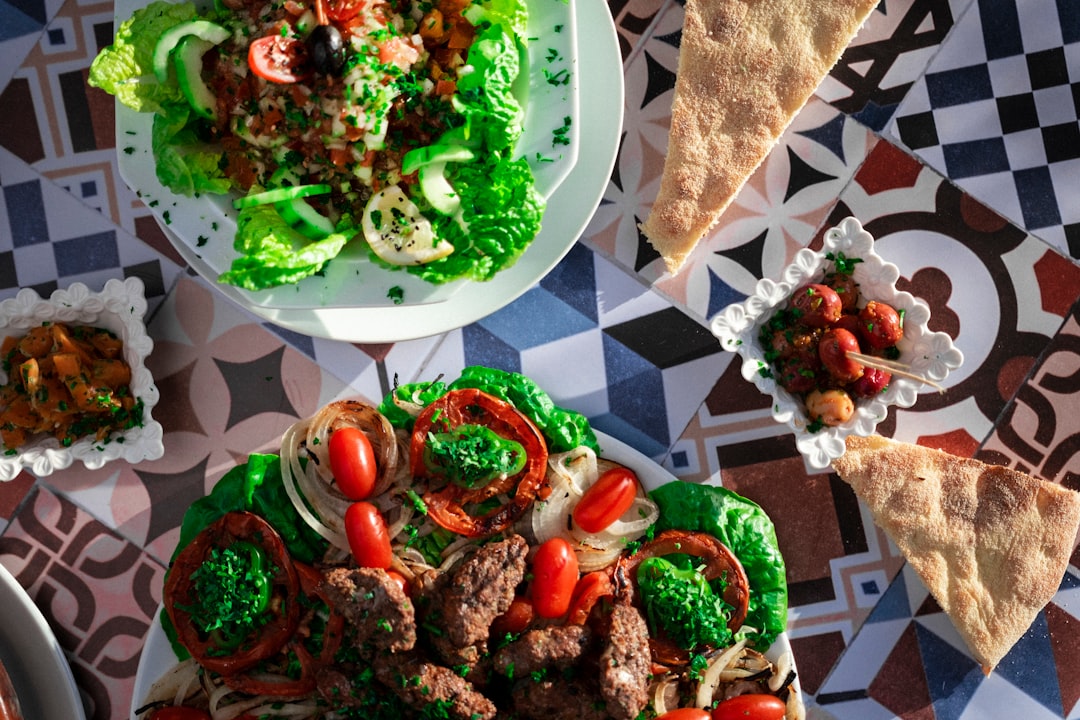
Raw kibbeh (kibbeh nayyeh) is one of the most overlooked Lebanese restaurant low-carb options on the menu. Made from raw minced lamb or beef with onion and spices (no bulgur shell), it's essentially seasoned tartare and sits very comfortably within a keto framework. Not every restaurant offers it, and personal comfort with raw meat varies, but it's worth knowing about.
What about hidden additives?
Restaurant kitchens sometimes use pre-made spice mixes, marinades, or sauces that contain common food additives including sugar, modified starches, or other fillers. This is particularly relevant for mass-market or chain Lebanese restaurants rather than traditional family-run establishments. When in doubt, asking about marinades is always reasonable.
If navigating these details feels overwhelming, tools like AlignEat's menu analysis feature can decode the menu for you before you even sit down, identifying dishes that match your dietary profile without the guesswork.
Counterarguments: is low-carb Lebanese dining really realistic?
Some nutrition professionals argue that restricting carbohydrates in a cuisine so centered on communal bread-sharing and grain-based dishes removes the cultural experience entirely. That's a fair point. Lebanese dining is deeply social, and the pita basket going around the table is part of the ritual.
The counterpoint, though, is that adaptation doesn't mean deprivation. You can still participate fully in the mezze culture, share grilled platters, enjoy labneh and mutabbal, and have a genuinely delicious meal. Skipping the pita or the rice doesn't strip the experience. It redirects your focus toward the many dishes that are naturally aligned with your goals.
For people managing food allergies alongside dietary preferences, this kind of menu navigation is even more important. Resources like food allergy facts and statistics highlight how many people are managing complex dietary needs at every restaurant visit. Low-carb preferences are just one dimension of a much wider picture of how people relate to food in public.
We also recognize that strict keto adherence isn't the right fit for everyone. If you're following a more flexible low-carb approach rather than strict ketosis, your options at a Lebanese restaurant expand meaningfully. A moderate portion of hummus, a small amount of tabbouleh, or even a few pieces of falafel become entirely manageable within a daily carbohydrate target of 50 to 100 grams.
The social pressure factor
One real challenge people face is the social pressure to eat what's being passed around the table. Declining bread or skipping shared dishes can feel awkward, especially in cultures where food refusal carries meaning. Having a simple, confident response ready ("I'm keeping things lighter tonight, but everything looks amazing") tends to dissolve the moment without requiring a lengthy explanation of your dietary choices. If you'd like more strategies for managing these situations across different cuisines, our guide on hidden ingredients in restaurant dishes covers practical approaches that translate across dining contexts.
Practical tips for your next Lebanese restaurant visit
Before you go
- Review the menu online and identify two or three anchor dishes you'll definitely order.
- Decide in advance whether you're having a strict or flexible low-carb day, so you know how much flexibility you have.
- Use a tool like AlignEat to scan the menu and flag options that match your preferences automatically.
At the restaurant
- Ask for your pita bread on the side rather than accepting the basket automatically. You're less likely to mindlessly eat it if it's not in front of you.
- Build your meal around a grilled protein main, two or three mezze plates, and a salad.
- Request substitutions calmly and specifically. "Can I get the warak dawali without rice?" is a clear, manageable ask.
- Don't stress over trace amounts. A tablespoon of hummus or a small spoonful of tabbouleh won't derail a well-structured day of eating.
Looking ahead: how technology is changing menu navigation
The future of dining with dietary restrictions is increasingly digital. AI-powered tools are already helping people with hidden allergen concerns and lifestyle diet preferences navigate menus across cuisines and languages worldwide. As these tools become more precise, the gap between what diners need and what menus communicate will continue to narrow. We expect that within the next few years, real-time menu personalization will become a standard part of the restaurant experience, not a niche tool for people with complex needs. That shift benefits everyone at the table, not just those with restrictions.
At AlignEat, we're building toward exactly that future: a world where eating out is enjoyable and stress-free regardless of your dietary requirements.
Conclusion
Lebanese cuisine, at its heart, is generous. It was made for sharing, for abundance, and for savoring food at a slow pace with people you care about. The good news for anyone eating low-carb is that most of what makes Lebanese food wonderful, quality proteins, fresh herbs, good olive oil, and bold spices, is naturally compatible with your goals.
The dishes to skip are mostly the structural ones: the bread, the rice, the bulgur-heavy preparations. Remove those from your order and you're left with one of the most vibrant and satisfying low-carb dining experiences available in any cuisine. You don't need to feel like an outsider at a Lebanese table. You just need to know where to look.
If building that kind of clarity at every restaurant sounds appealing, explore how AlignEat's plans can help you eat out with confidence wherever you are in the world.
Frequently Asked Questions
Can I eat hummus on a strict keto diet at a Lebanese restaurant?
Yes, in small portions. A standard two-tablespoon serving of hummus contains roughly 4 to 5 grams of carbohydrates, which fits within a strict keto limit of 20 to 25 grams per day if you manage the rest of your meal carefully. Pair it with raw vegetables instead of pita to keep the carb count low.
How does a Lebanese restaurant compare to other Middle Eastern cuisines for low-carb dining?
Lebanese cuisine is generally more low-carb-friendly than Turkish or Persian cuisines, which rely more heavily on rice-based dishes and bread-wrapped preparations. Lebanese menus offer a wider variety of grilled meats and vegetable-forward mezze that naturally align with low-carb eating without significant modification.
What should I do if the restaurant can't confirm whether a dish contains hidden carbs?
Default to the safest choices: plain grilled meats, labneh, mutabbal, and simple salads dressed with olive oil and lemon. These dishes are structurally simple enough that hidden high-carb additions are unlikely. Avoid anything described as "stuffed," "crusted," or "marinated in a sweet sauce" without clarification.