

On this page
- Understanding Jain Food Restrictions Beyond "Vegetarian"
- The Real Challenge: Hidden Ingredients in Restaurant Cooking
- How to Order at a Restaurant Without a Jain Menu
- A Counterargument Worth Addressing: Is It Too Restrictive to Dine Out?
- How Technology Is Changing the Jain Dining Out Experience
- Frequently Asked Questions
Eating out as a Jain is one of the more nuanced dietary challenges you'll encounter at a restaurant table. It's not simply a matter of skipping meat. The restrictions run deeper, touching on root vegetables, certain plant-based ingredients, and preparation methods that most kitchen staff rarely think about. And yet, Jain diners eat out every day, all over the world, often at restaurants that have never heard of ahimsa-based eating.
This guide is for anyone navigating a restaurant menu with Jain principles in mind, whether you've followed this diet your entire life or you're newer to it and still building confidence. We'll walk through exactly what to look for, what to avoid, how to communicate your needs without a lengthy explanation, and how technology is quietly transforming this experience.
Understanding Jain Food Restrictions Beyond "Vegetarian"
A common misconception is that Jain eating is simply a stricter form of vegetarianism. In practice, it's a distinct framework grounded in the principle of non-violence (ahimsa), which extends to the lives of microorganisms living in root vegetables and underground plants.
What Jains Don't Eat (and Why It Matters at Restaurants)
The most relevant strict Jain food restrictions for restaurant dining include:
- Root vegetables: potatoes, carrots, beets, turnips, radishes, sweet potatoes, and yams are all excluded because uprooting them destroys the entire plant and the organisms living in the soil around it.
- Alliums: onions, garlic, leeks, shallots, and chives are avoided because they are bulb vegetables with similar concerns, and also because they are believed to excite passions according to Jain philosophy.
- Eggplant (aubergine): excluded by many Jain practitioners, particularly those following stricter interpretations.
- Meat, fish, and eggs: standard across all Jain practice.
- Multi-seeded fruits: figs, brinjal, and certain berries are avoided because of the high concentration of tiny organisms inside.
- Fermented foods: alcohol and some fermented products are excluded.
The Jain allium onion garlic restriction is particularly challenging in restaurants because onion and garlic are foundational aromatics in cuisines worldwide, from Italian soffritto to Indian tadka to French mirepoix. They appear in stocks, sauces, marinades, and spice blends, often invisibly.
What Jains Can Eat
Above-ground vegetables (tomatoes, zucchini, capsicum, spinach, cauliflower, broccoli, beans, lentils), most fruits, grains, dairy, nuts, and seeds are all generally permitted. This actually opens up a reasonable range of restaurant options if you know where to look.
The Real Challenge: Hidden Ingredients in Restaurant Cooking
Here's where dining out gets genuinely complicated. A dish that looks Jain-friendly on paper can be prepared with garlic-infused oil, onion powder in a spice blend, or a stock base containing root vegetables. These aren't listed on menus. Even well-meaning servers may not know every ingredient in a sauce or marinade.
Common Hidden Sources of Non-Jain Ingredients
Ingredient Category | Common Hiding Places | Risk Level |
|---|---|---|
Garlic and onion | Stocks, sauces, spice blends, dressings, marinades | Very High |
Potato | Thickened soups, bread dough, gnocchi, samosas | High |
Carrot and celery | Vegetable stocks, stews, risottos | Medium-High |
Eggplant | Mixed vegetable dishes, pasta sauces, dips | Medium |
Fermented ingredients | Miso, soy sauce, certain vinegars, kimchi-based dishes | Medium |
This is why the experience of dining out with Jain rules can feel exhausting. You're essentially doing ingredient archaeology on every dish. And if you've ever had to explain to a server why you can't have garlic "even a little bit," you understand the awkwardness that often follows.
Cuisines That Tend to Work Well
Some global cuisines naturally align better with Jain requirements, at least partially:
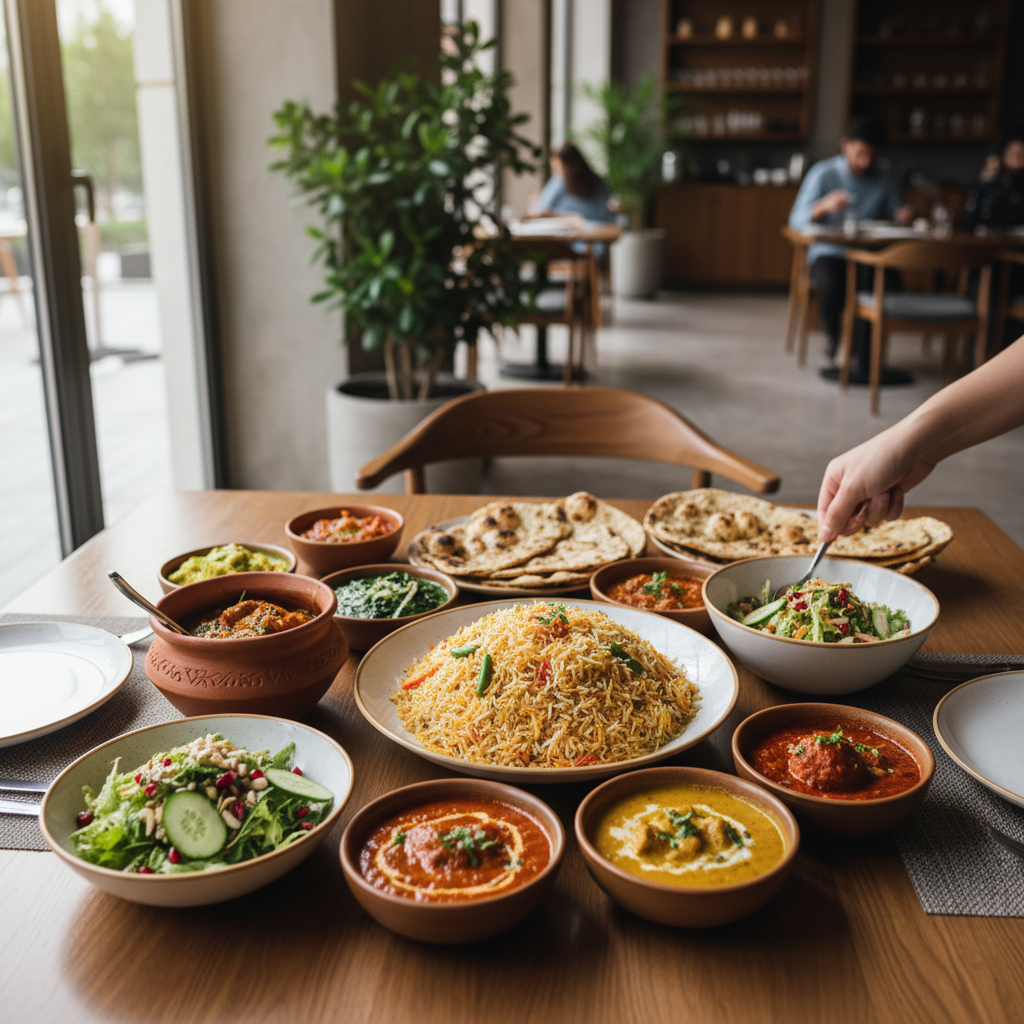
- Jain-adapted Indian cuisine: Many Indian restaurants, particularly those with a Gujarati or Rajasthani focus, are familiar with Jain cooking and can prepare dishes without alliums on request.
- Italian (with care): Pasta with simple tomato-based sauces, risottos made with vegetable stock (confirm no onion), and dishes built around above-ground vegetables can work well.
- Japanese: Vegetable sushi, edamame, tofu-based dishes, and clear soups can be navigable, though dashi stock (fish-based) and soy sauce (fermented) require checking.
- Mediterranean: Dishes centered on grains, legumes, and above-ground vegetables often have good options, though garlic is common.
How to Order at a Restaurant Without a Jain Menu
Most restaurants globally don't have a Jain diet restaurant menu or even a dedicated section. That doesn't mean you're left with a side salad and sparkling water. It means you need a clear strategy.
Before You Arrive
Check the menu online before going. Look for dishes with simple preparation methods (grilled, steamed, baked) and visible ingredient lists. Dishes with long sauce descriptions or complex preparations are harder to verify.
If the restaurant has a contact form or phone number, a brief message ahead of time can go a long way. Something simple like "I follow a Jain diet and avoid all root vegetables, garlic, and onions. Is there someone in the kitchen I could speak with about options?" frames it respectfully and gives the kitchen time to prepare.
At the Table
When ordering, be specific rather than vague. "I'm vegetarian" doesn't communicate Jain requirements. Instead, try:
- "I can't have any onion or garlic, including in oils, sauces, or stocks."
- "I need to avoid all root vegetables, including potato, carrot, and beet."
- "Can the kitchen confirm whether the vegetable stock contains onion or carrot?"
Asking to speak with a chef or senior kitchen staff is entirely reasonable, especially at restaurants where the server may not have detailed ingredient knowledge. Good restaurants welcome these conversations.
Dishes That Are Often Safe Starting Points
- Grilled or steamed above-ground vegetables with olive oil and sea salt
- Dal or lentil dishes at Indian restaurants (confirm no onion tempering)
- Simple pasta with marinara (ask about garlic)
- Grain bowls built on rice, quinoa, or couscous with vegetable toppings
- Cheese-based dishes like paneer preparations (at Jain-aware Indian restaurants)
- Fresh fruit plates and nut-based desserts
A Counterargument Worth Addressing: Is It Too Restrictive to Dine Out?
Some people, even within Jain communities, debate whether strict adherence to all Jain principles while eating at non-Jain restaurants is practically possible or even necessary. The argument goes that trace amounts of a forbidden ingredient in a sauce or stock are inevitable and unverifiable, so a degree of flexibility is reasonable when eating out.
This is a personal and philosophical question, not a dietary one. Different Jain practitioners draw the line differently. Some follow paryushana-level strictness year-round; others apply stricter rules only during specific religious periods.
What we'd say is this: the goal of this guide isn't to police anyone's practice. It's to give you the information and tools to make the choices that align with your level of observance, confidently and without stress. The more informed you are, the more agency you have, regardless of where you land on the spectrum.
Understanding food labeling and common food additives used in commercial cooking can also help you identify unexpected sources of restricted ingredients, particularly if you're navigating packaged sauces or pre-made components at casual dining establishments.
How Technology Is Changing the Jain Dining Out Experience
The honest reality is that manually cross-referencing every dish against Jain requirements is time-consuming and stressful. This is particularly true at international restaurants where the menu may be unfamiliar, in a different language, or simply too long to analyze before the waiter returns.
This is exactly the problem AlignEat was built to solve. Our AI-powered menu companion instantly decodes restaurant menus from around the world and identifies which dishes meet your specific dietary requirements, including strict Jain preferences. You can set your restrictions once, covering root vegetables, alliums, meat, eggs, and more, and then let the platform flag safe options and highlight potential problem areas in any menu you upload or scan.
Instead of decoding each dish manually or relying on a server who may not know whether the risotto was made with onion stock, you get clear, immediate guidance. No awkward conversations. No guesswork. Just confident choices.
For those managing multiple dietary concerns alongside Jain principles (common in families where one member has a diagnosed food allergy on top of Jain restrictions), this kind of layered filtering becomes genuinely invaluable.
Looking Ahead: The Future of Inclusive Menus
The restaurant industry is slowly moving toward more granular menu transparency. We're already seeing QR-code menus in many countries that link to detailed ingredient lists. Some forward-thinking restaurant groups are beginning to tag dishes with dietary filters that go beyond "vegetarian" and "vegan."
As AI tools become more embedded in how restaurants manage their menus and how diners interact with them, Jain diners, along with those managing allergies and other specific dietary needs, will be among the biggest beneficiaries. The future isn't one where every restaurant has a dedicated Jain section. It's one where every menu is instantly decodable for every diner's needs.
That shift is already underway. And until every restaurant catches up, having smart tools in your pocket is the most practical way to eat confidently, anywhere.
Frequently Asked Questions
Is Jain food the same as vegan food?
No, and this distinction matters when dining out. Jain vegetarian eating goes well beyond vegan in some areas and actually differs in others. Vegans avoid all animal products including dairy; many Jains consume dairy. However, Jains also avoid root vegetables and alliums that vegans eat freely, like garlic, onions, and potatoes. A dish marked "vegan" on a menu is not automatically Jain-friendly, and a dish marked "Jain" at an Indian restaurant would typically exclude dairy unless specified. Always verify based on your own level of practice.
How do I explain Jain restrictions to a server who isn't familiar with the diet?
The clearest approach is to lead with specifics rather than the label. Say something like: "I can't eat meat, fish, eggs, onions, garlic, or any root vegetables like potatoes, carrots, or beets." This gives the server concrete items to check with the kitchen, rather than expecting them to know what "Jain" means. Asking to speak with a chef is always reasonable at restaurants that take dietary needs seriously, and most reputable establishments are happy to accommodate the request.
Can AI tools really help with Jain menu navigation?
Yes, and they're getting better at it quickly. Tools like AlignEat allow you to specify your exact dietary profile, including the full range of Jain restrictions, and then analyze restaurant menus against those requirements in real time. This is particularly useful at restaurants that aren't familiar with Jain cuisine, in countries where the food culture is unfamiliar, or simply when you want to review a menu before arriving without spending twenty minutes on research. The combination of AI-powered analysis and your own judgment gives you the most complete picture possible when eating out.