
On this page
- Why Soy Is Everywhere in Chinese Cuisine (And Why That Matters for Your Allergy)
- Safe and Adaptable Chinese Dishes: What You Can Actually Order
- Navigate Global Chinese Restaurants: What Changes Across Singapore, Bangkok, London, and Beyond
- How AlignEat Can Help Navigate This Complexity
- Frequently Asked Questions
Let's be honest about what you're dealing with. Chinese cuisine and soy have a relationship that goes far deeper than a bottle of soy sauce on the table. Soy is woven into the foundational flavor architecture of Chinese cooking in a way that has no real parallel in European or Middle Eastern cuisines. For someone managing a soy allergy at a Chinese restaurant, this isn't a minor inconvenience.
This guide is written for diners who travel, who want to eat well, and who refuse to let a dietary restriction turn every Chinese restaurant into a minefield. Whether you're in Singapore, Bangkok, London, or Hong Kong, the principles here will help you eat with confidence rather than anxiety.
Why Soy Is Everywhere in Chinese Cuisine (And Why That Matters for Your Allergy)
Soy sauce, fermented bean pastes like doubanjiang, and soy-based cooking oils are not garnishes in Chinese cooking. They're the flavor base. Think of the role butter plays in French cuisine, or olive oil in Italian. You can't simply swap them out without fundamentally changing the dish. This is different from Western contexts where allergens tend to be added rather than foundational.
The practical consequence? Even dishes that sound simple can be soy-laden at the preparation stage. A "steamed vegetable" may have been blanched in a wok seasoned with soy oil. A "lightly seasoned" fish may have been marinated before it ever hit the heat.
Red Flag Menu Words for Soy Allergy Diners
Knowing which menu language to treat as a warning is one of the most practical skills you can develop. When you're scanning a Chinese menu, watch for these terms:
- Glazed or lacquered: almost always involves a soy-based reduction or marinade
- Braised: the liquid almost certainly contains soy sauce, often in significant quantity
- Stir-fried: high heat, shared wok, soy oil or sauce likely used in the cooking process
- Marinated: soy sauce is the most common marinade base in Chinese cooking
- Teriyaki or hoisin: both contain soy as a primary ingredient
Cross-contact is equally significant. Shared woks, communal sauce bowls, and fryers used across multiple dishes mean that even a soy-free ingredient can carry soy traces by the time it reaches your plate. Understanding this reality helps you ask smarter questions rather than simply trusting a menu description.
One more hidden source worth knowing: Worcestershire sauce, which appears in some Chinese-Western fusion dishes and certain dipping sauces, contains soy. Don't assume that non-Chinese condiments are automatically safe at a Chinese restaurant.
Safe and Adaptable Chinese Dishes: What You Can Actually Order
Here's the more encouraging part. Several dishes are either naturally soy-free in Chinese cooking or can be prepared simply enough that you can request a soy-free version with confidence.
Dishes That Work in Your Favor
Dish | Why It Can Work | What to Verify |
|---|---|---|
Steamed whole fish with ginger and white pepper | Traditionally requires no soy sauce; salt, ginger, and chili do the work | Ask that no soy sauce is added post-steaming |
Roasted Peking duck (skin only) | The roasting process itself is often soy-free; skin and fat are the focus | Skip all dipping sauces; verify prep oil |
Plain steamed rice or congee | Rice itself contains no soy; congee base is water or plain broth | Ask about broth composition for congee |
Rice noodles (plain) | Rice-based, no soy in the noodle itself | Request sauce on the side or omitted entirely |
Hot pot (plain broth, controlled station) | Broth base can be simple (bone broth, water with aromatics) | Manage your own sauce station; avoid communal dipping bowls |
Roasted and grilled proteins more broadly (whole roasted chicken, certain char siu preparations) can also be soy-free if the kitchen prepares a clean version. The key phrase to use when ordering is "plain preparation" or "without sauce or marinade." Chefs understand this request, particularly in higher-end restaurants where kitchen agility is greater.
What to Avoid
Keep these categories at arm's length unless you've had a direct conversation with the kitchen:
- All stir-fried dishes (wok cooking almost always involves soy-based sauces or oils)
- Braised meats and red-cooked dishes (soy sauce is a primary braising liquid)
- Dim sum dumplings (wrappers are generally fine, but fillings and dipping sauces are not)
- Any protein described as "sauced," "glazed," or "marinated"
We know the counterargument here: some diners feel that avoiding all stir-fries and braised dishes leaves the menu feeling thin. That's a fair point. Chinese cuisine is extraordinarily broad, and the above list does cut off a significant portion of a typical restaurant menu. But knowing what's genuinely off-limits lets you focus your energy on what's possible, and engage the kitchen in a targeted, specific conversation rather than a general "I have a soy allergy" that leaves everyone uncertain.
Navigate Global Chinese Restaurants: What Changes Across Singapore, Bangkok, London, and Beyond
One of the more useful things to understand when traveling with a soy allergy through Asia and beyond is that "Chinese restaurant" is not a monolithic category. The soy dependency of a dish varies significantly depending on the regional tradition and the restaurant's positioning.
Location-Specific Context
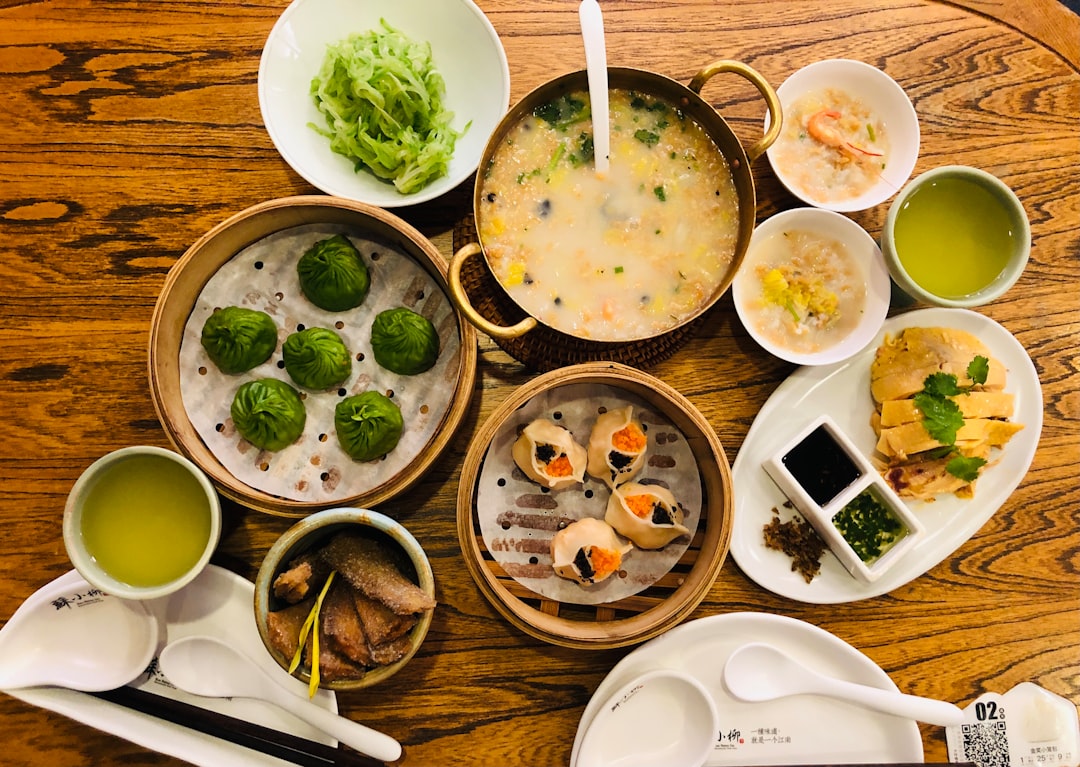
London and Singapore (upscale dim sum and Cantonese): Higher-end Chinese restaurants in these cities often use lighter, more refined sauces than their street-level counterparts. Some use less soy-heavy preparations precisely because their clientele includes international diners with varied dietary needs. This doesn't mean soy disappears, but the kitchen is more likely to accommodate specific requests and to have granular knowledge of ingredient sourcing. Ask directly about sauce composition and cooking oil.
Bangkok (Thai-Chinese fusion): Thai-Chinese cooking can shift toward fish sauce and tamarind as primary flavor builders, which opens some possibilities. But don't assume "Thai-Chinese" means soy-free. Many kitchens use both traditions simultaneously. Verify ingredients before treating a Thai-Chinese menu as inherently safer than a Cantonese one.
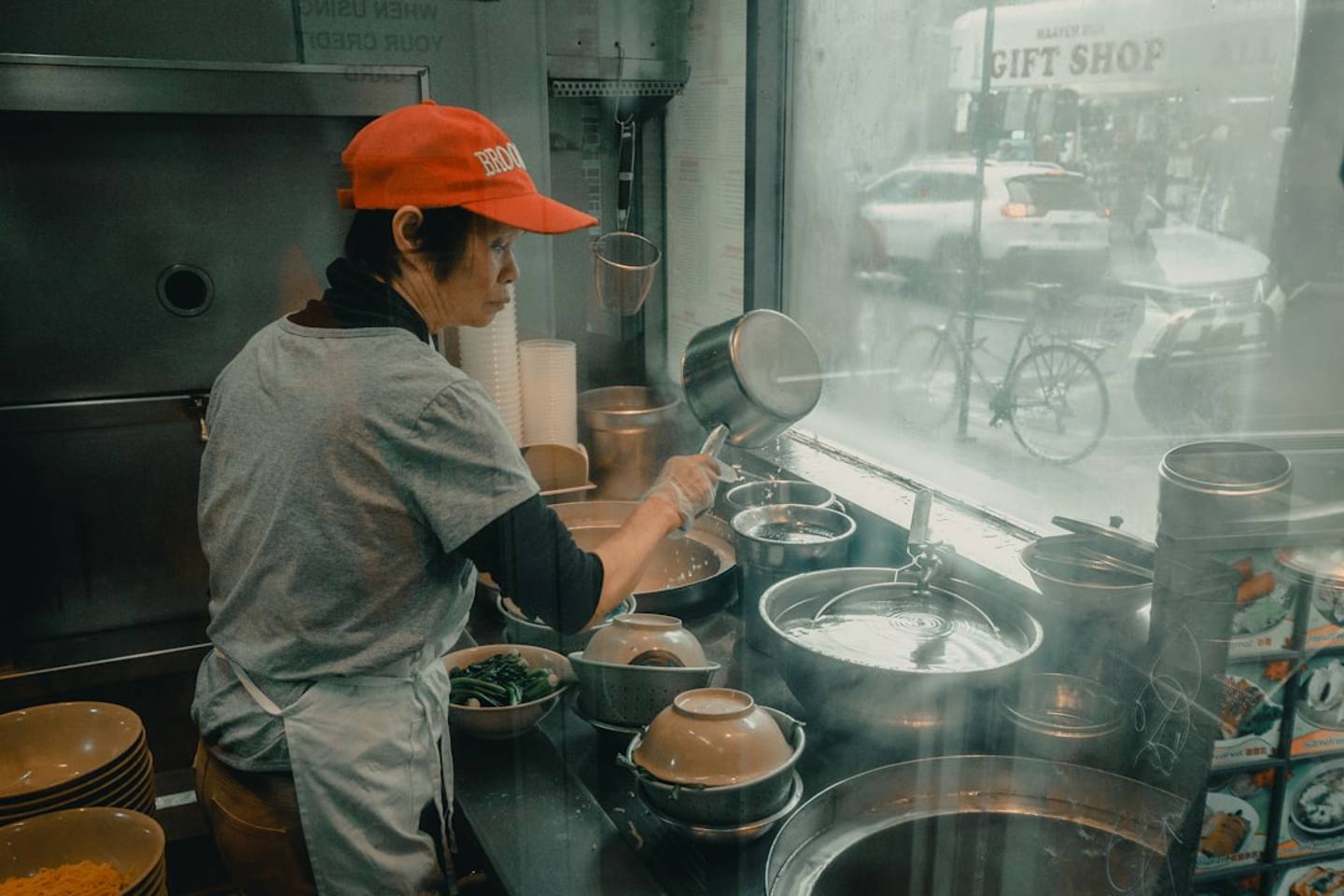
Hong Kong street-level and hawker-style: These kitchens move fast, cook in shared woks, and typically have limited capacity to customize. Cross-contact risk is higher. If you're eating at a hawker stall, steamed dishes and plain rice are your safest options.
Key Phrases to Communicate Your Allergy
Having the right language matters more than any other single strategy. Kitchen staff who speak Mandarin or Cantonese will respond more precisely to a phrase in their own language than to an English explanation filtered through a server.
- Mandarin: "Wǒ duì dòuyóu guòmǐn" (我对豆油过敏) - I am allergic to soy
- Cantonese: "Ngo deui dau-jau gwo-min" - I am allergic to soy
Use these phrases directly, calmly, and early in the conversation. Follow up by asking specifically about cooking oil (not just sauces), broth bases, and whether the kitchen uses shared preparation surfaces. International Chinese restaurants vary widely in how they handle these questions, so the directness of your inquiry matters.
Looking forward, there's reason to be optimistic. As allergen labeling regulations tighten across markets in Europe, Southeast Asia, and beyond, restaurant kitchens are becoming more systematically informed about what's in their dishes. The future of soy allergy restaurant dining globally is one where kitchens have this information documented rather than locked in a head chef's memory.
How AlignEat Can Help Navigate This Complexity
AlignEat was built for exactly this kind of problem. The app started from a lived experience: a family at a restaurant in Bali, a menu where everything sounded good and nothing was labeled, and the exhausting reality that navigating dietary restrictions often means burdening the people around you. That frustration drove the creation of something better.
AlignEat is an AI-powered menu companion that decodes restaurant menus against verified allergen databases, identifying which dishes are safe, which need a question, and which to avoid. For soy allergy Chinese restaurant dining, this means the app doesn't just flag "soy sauce" when it appears in a dish description. It understands that miso contains soy, that certain dipping sauces contain soy, and that preparation risks like shared fryers and woks go beyond the ingredient list printed on a menu. It thinks about the kitchen, not just the plate.
You can see how AlignEat reads a menu to understand the logic behind how it surfaces safe options versus items that need verification. The system is transparent about its reasoning. When it flags a dish, it explains why. When it can't verify an ingredient, it says so rather than guessing.
For diners traveling across Singapore, Bangkok, London, and beyond, AlignEat works in any language and reads any menu format: photo, QR code, PDF, or typed. At a hawker stall with a handwritten board, the same logic applies as at a formal Cantonese restaurant in London.
For groups traveling together (where one person has a soy allergy and others have their own dietary profiles), AlignEat maps every profile against every dish simultaneously, surfacing common ground rather than making one person's restriction the whole table's problem.
Eating Chinese cuisine with a soy allergy is genuinely hard. We won't pretend otherwise. But hard doesn't mean impossible, and with the right knowledge, the right phrases, and the right tool in your pocket, you can eat well at almost any Chinese restaurant in the world. That's the point.
Frequently Asked Questions
Are there any Chinese dishes that are completely soy-free without modifications?
Yes, a handful of dishes are naturally soy-free. Steamed whole fish seasoned with only salt, ginger, and white pepper is the clearest example. Plain steamed rice and plain rice noodles (without sauce) also contain no soy. Always confirm preparation details, but these are your most reliable starting points at any Chinese restaurant.
Is soy oil as risky as soy sauce for people with soy allergies?
Highly refined soy oil is considered lower risk by many allergists because the refining process removes most protein. However, cold-pressed or unrefined soy oil retains more protein and poses a greater risk. The safest approach is to ask directly which cooking oil the kitchen uses and discuss your specific sensitivity with your allergist before dining out.
How do I communicate a soy allergy at a Chinese restaurant if there's a language barrier?
Use the phrase in the local language directly. In Mandarin, "Wǒ duì dòuyóu guòmǐn" (我对豆油过敏) communicates a soy allergy clearly. In Cantonese, use "Ngo deui dau-jau gwo-min." Showing the written characters on your phone is often more effective than speaking alone, especially in a loud kitchen environment.